
New attacks on oil shipments took place in the Middle East conflict, fears about the world’s energy supply, and worries on human cost of the fighting started on the 12th day of the conflict. Instead of slowing down, the war seems to be extending to key shipping routes and civilian locations. That has caused panic in the region and even beyond.
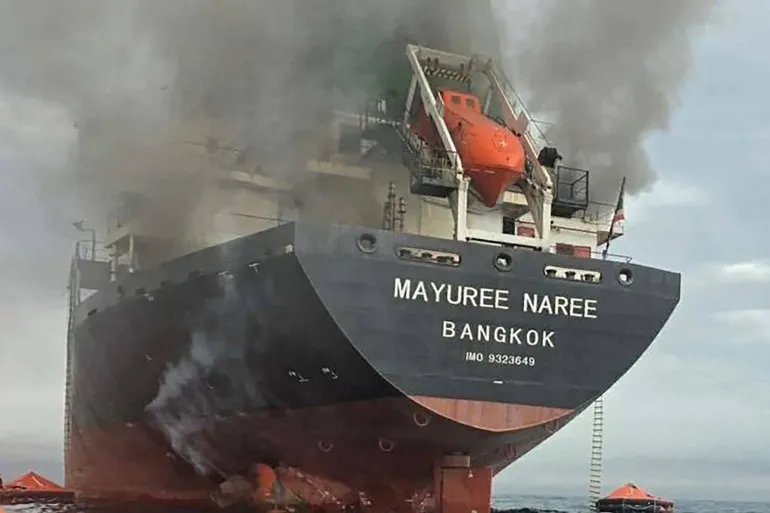
The officials and media gave reports that Iran tightened reinforcement in the retaliatory attacks on energy-related targets. Iraqi waters were attacked on two foreign oil tankers. In yet another incident, a video that had been geolocated by CNN was seen to depict an Iranian drone hitting an Omani fuel tank at a port. These developments have raised concerns that the war may cut one of the major oil transportation corridors globally.
Meanwhile, the price of oil jumped once more and rose above 100 a barrel overnight. Even when the International Energy Agency decided to release a record 400 million barrels of oil into the emergency stocks in a bid to quell the market, the market had already risen.
Attacks on Tankers Raise Alarm in the Gulf
It was the reported attack on two foreign oil tankers that were reported in Iraqi waters, and this was one of the most serious developments of the day. The attacks indicate that Iran can broaden its reaction by not only securing military bases, but also focusing on energy supply routes. The change is important since an attack on oil infrastructure could have a far-reaching effect outside of the battlefield.
The Strait of Hormuz is still the focus of those anxieties. It hosts one of the most significant shipping lanes globally in terms of oil and gas, and a substantial part of energy exports worldwide go through it. Just a small-scale attack in the region or other nearby ones can make the markets tremble easily and cause panic over a broader disturbance.
In another video, which was geolocated by CNN, an Iranian drone was seen striking a fuel tank at an Omani peninsula. That would be another indicator that the conflict is penetrating more into the region infrastructures in case it is confirmed. Of particular concern are ports, storage, and tankers, since their destruction disrupts not only the supply but also the international trade of certain states.
Such attacks will tend to mount pressure on the governments of the Gulf and on the global powers, which rely on the consistent supplies of oil. Although the physical damage may be restricted, the ripple effect may be dramatic. Shipping companies can reroute the ships, postpone the departure, or deal with the cost of insurance increasing drastically.
Oil Prices Rise Despite Emergency Supply Release

Overnight, oil prices rose above a record of over 100$ a barrel again, a fact that demonstrates the state of being jittery in the market. In ordinary times, a large discharge of emergency reserves would have relieved somewhat of that pressure. This time, it did not.
The move by the International Energy Agency to release the 400 million barrels was not a big step, but the traders pushed the prices up. That implied that markets are responding not only to supply issues in the short term, but also to the fear of more attacks. With tanks, ports, or export terminals also in danger, the supply chains might become even smaller.
Trump Declares Victory as Fighting Continues
President Trump has continued to repeat his argument that the United States has already won the war. It is only a matter of time,” he said, when do we get enough? It was a confidence move on his part, yet the future seems to be even more disruptive.
The combat is not coming to an end. In many ways, it is widening. Cargo ship and fuel infrastructure attacks prove that Iran can still retaliate using means that would endanger trade routes and the security of the region. Reported deaths of civilians and potential uprisings with the top officials signify a confrontation getting into a more threatening phase.
Report Says US Accidentally Hit an Iranian School
The other dark side of recent development is that the US military accidentally hit an Iranian elementary school on February 28. The attack could have occurred due to the outdated information regarding a nearby naval base, according to two sources.
Should this account be true, serious repercussions would be on intelligence, targeting decision and wartime decision-making. When there are civilian victims, particularly where children and schools are concerned, there are permanent scars. They are able to influence the opinion of people, inflame anger, and make any attempt to justify the operation more difficult.
Even unintentional attacks will be turning points in a war. They also tend to undermine confidence in government assertions of accuracy in hitting the target and add to the demands of responsibility. They may also turn diplomacy into a much harder task, particularly where communities believe that they have been victimized without any explanation or even justice.
New Questions Surround Iran’s Supreme Leader
Another report has also attracted interest to a new Supreme Leader in Iran, Mojtaba Khamenei. The source connected to the situation informed CNN that he sustained a broken foot and other minor traumas on the first day of the US and Israeli bombardment process.
That source says that he also had a bruise on his left eye, as well as small cuts to his face. The description given of the injuries was restricted, but the political thought of this is far more than the medical description. During the war, one can be easily carried away by rumors and lack of confidence due to stopping all because of uncertainty regarding the best leader in the country.
A Conflict Growing More Dangerous
The latest events show a war that is becoming broader, more complex, and more costly. What began as a military confrontation is now affecting energy markets, civilian safety, regional shipping, and political leadership.
Several themes now define this stage of the conflict:
- attacks on oil infrastructure and shipping
- rising global economic pressure from higher energy prices
- disputed claims of military success
- increasing concern over civilian casualties
- uncertainty around Iran’s top leadership
Taken together, these developments suggest that the conflict is entering a more unstable phase. Even if one side claims progress, the overall picture shows a widening crisis with serious regional and global consequences.