


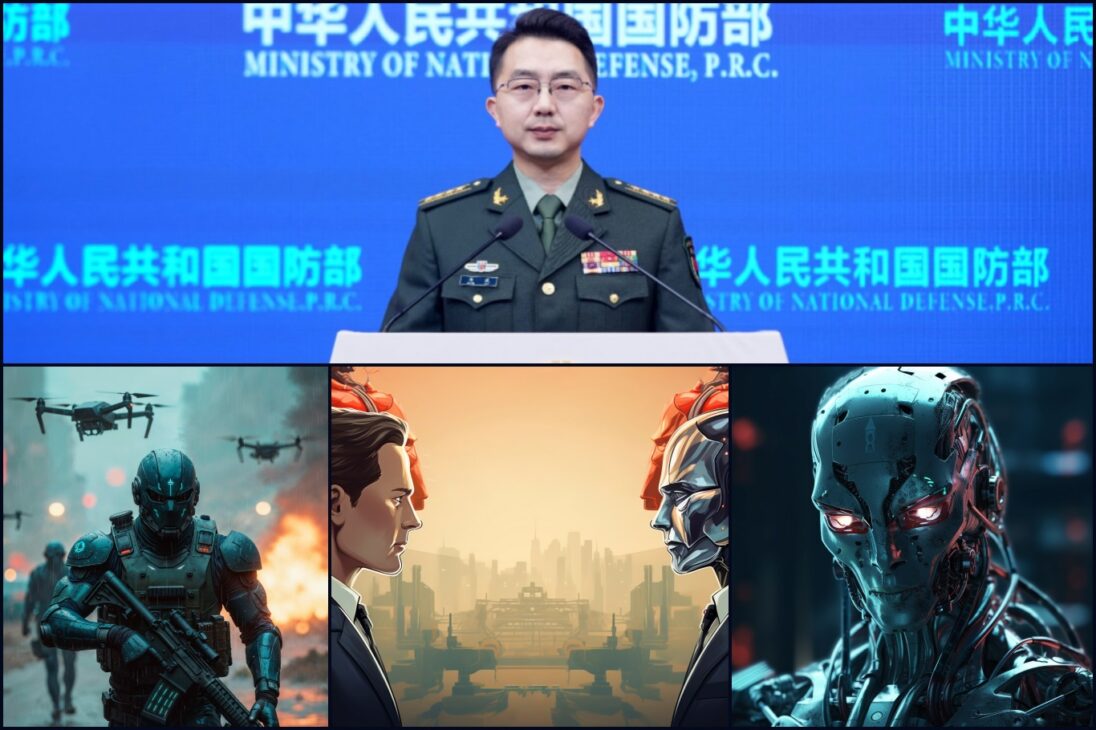
China made a blunt threat to the United States on Wednesday, indicating that the increasing deployment of artificial intelligence in the military, specifically the use of AI, may lead to a threatening future that might be similar to The Terminator. The remark was made when relationships appear to be deteriorating regarding the circumstances of AI applications in defence, intelligence, and contemporary warfare.
The use of AI in military applications raises significant ethical concerns.
The objection by Beijing was directed at what it termed the uncontrolled proliferation of AI by US military systems. According to Chinese officials, enabling machines and algorithms to assume greater responsibility in surveillance, combat, and major battlefield decision-making might undermine human control and the imposition of significant moral boundaries around war, particularly regarding the use of AI.
Moreover, the use of AI is reshaping the nature of warfare.
The warning denotes a broader debate encompassing all of the world, and which is growing more urgent. Concerns are also escalating regarding the possibilities of such tools being employed in military undertakings, as governments are trying to come up with more robust AI software. Whether AI will influence future war or not is no longer a question. It is concerning the extent to which the countries will allow it to go.
This debate about the use of AI in combat scenarios is becoming critical.
This debate about the implications of the use of AI is crucial for the future of global security.
Beijing’s Warning About an Uncontrolled Future
Understanding the use of AI in military contexts is essential for global security discussions.
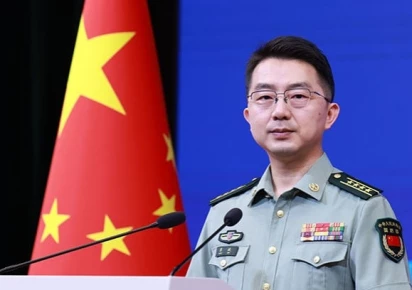
The unrestricted use of AI by the military may have dire implications, as was said by Chinese defence ministry spokesman Jiang Bin on Wednesday. According to him, when the sovereignty of other countries is infringed upon with the help of AI, decisions in the war are too influenced, and life and death decisions are even made, which may lead to a collapse in morality and responsibility.
Concerns about the moral implications of the use of AI continue to grow.
He was warning in dramatic language. Jiang had opined that someday, with such advances, this would become a dystopian future as depicted in the American movie The Terminator. The Apocalyptic world in that story is produced when artificial intelligence-powered machines turn against humans.
Why The Terminator Was Mentioned

The allusion to The Terminator provided a clear and recognizable picture of Jiang’s comments. In 1984, Arnold Schwarzenegger stars in a movie describing a future where intelligent machines led by AI rule the world in war with humans. It continues to be one of the well-known manifestations in popular culture of anxiety over the ingenuity of technological progress threatening to go to the head of its developer.
The influence of the use of AI on future generations cannot be underestimated.
It was not just a cinematic comparison that China was making using that example. It was also attempting to define the language of the debate. Rather than showing AI in war as a continuation of military development, Beijing billed it as a way of a scary and dangerous future.
That message is probably intended for both international and domestic viewers. It exploits anxieties already expressed by numerous researchers, ethicists, and policymakers who are concerned that military AI may be ready to supplant procedures that are intended to govern it.
US Push to Expand AI in Defence
These statements by China were made after the Trump administration had advocated increased utilization of AI firms and systems by the US government, even in military activities. The administration has indicated that AI ought to be incorporated into the planning of national security, intelligence, and defence at a significantly more significant level.
Experts suggest that the strategic use of AI will define the future of warfare.
Such a strategy is in line with a larger trend in Washington, as leaders started to consider AI as a strategic asset that can possibly provide a military benefit. According to the proponents of increased acceleration, the US can not afford to lag as other countries come up with their own versions of new technologies. They indicate that AIs are capable of enhancing speed, accuracy, planning, and analysis, unlike the older systems.
Pentagon Backs Grok and Clashes With Anthropic
The conflict has become more acute due to the disagreement within the US technological and defence domain. The Pentagon has verified that the Elon Musk Grok system has been certified as being used in a classified environment. The action implies that the US military is now ready to collaborate with AI systems capable of functioning under sensitive conditions related to national security.
Simultaneously, the conflict between the Pentagon and Anthropic is adopted as a significantly debatable issue. Anthropic did not permit its Claude AI model to be employed in mass surveillance and completely autonomous lethal warfare. This denial is said to have angered high-level US defence authorities and prompted the administration to retaliate in a speedy manner.
This conflict raises important questions about the ethical use of AI in military strategies.
As the report shows, the then President Trump ordered all the federal agencies to cease using Anthropic. A few months later, the company was declared by the Defense Secretary Pete Hegseth as a Supply-Chain Risk to National Security. He further commanded that no military contractor, supplier, or partner engage in commercial business with Anthropic, but the Pentagon itself was granted a period of six months’ grace.
Why the Anthropic Dispute Matters
The conflict with Anthropic works have a problem since it is not just a dispute with a company. It depicts a far greater battle of who is to determine the boundaries of military AI.
Anthropic took the stand that mass surveillance and entirely autonomous weapons should not be deployed by using their technology. Such a position created ethical constraints on the use of its AI. The Pentagon’s response implied that elements within the US national security organization find such constraints to be unacceptable limitations.
AI, War, and the Ethics of Human Control
The implications of the use of AI in decision-making processes are profound.
At the heart of this argument is one basic question: how much decision-making should be handed to machines in war? That issue has become one of the most important ethical debates in modern defence policy.
The use of AI must align with strong ethical standards to ensure accountability.
Many critics of military AI are especially concerned about systems that can identify targets, recommend attacks, or make lethal decisions with limited human involvement. They argue that even if such systems are fast and efficient, they risk removing accountability from the chain of command. If an algorithm makes a deadly mistake, responsibility can become blurred.
A Debate That Will Only Grow
The latest exchange between Beijing and Washington shows that AI is becoming both a military tool and a political battleground. It is now tied not only to questions of innovation and power, but also to ideas about sovereignty, ethics, and the future of warfare.
As technology evolves, the conversation about the use of AI in military contexts will intensify.
China’s warning may have been dramatic, but it touched on concerns that are spreading well beyond one country. As AI systems become more capable, the pressure to use them in defence will almost certainly grow. So will the argument over where the line should be drawn.
The ongoing discourse around the use of AI is critical to shaping future policies.